Gambler's Fallacy — How Do You Avoid It?
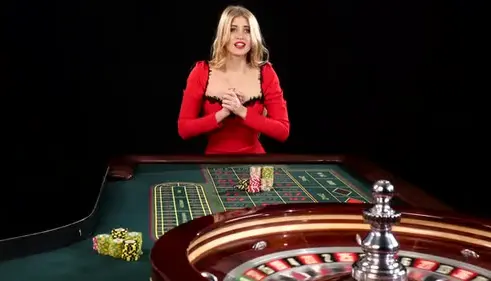
The Gambler's Fallacy is a cognitive defect that makes players believe past random outcomes dictate future ones — and if you don't kill it at the root, it will drain your bankroll faster than any house edge. I've watched this bias wreck thousands of accounts, and the pattern never changes: a player sees five reds in a row on roulette and slams their entire stack on black, convinced the wheel owes them a correction. That logic is poison. 🎯
The Mechanical Reality of Independent Events
Every spin, every deal, every roll — these are independent events. A roulette wheel has no memory. A slot machine's RNG doesn't track your losses. The probability of red hitting on spin number fifty-one is exactly the same as it was on spin number one. This is the core mechanism that the Gambler's Fallacy ignores, and it's where casual players bleed out. They mistake variance for compensation. They think the universe is balancing a ledger. It isn't.
The math here is brutal and simple. The probability of red on a European wheel is 18/37, every single time. After five reds, it's still 18/37. The wheel has no obligation to deliver black. Your brain is the only thing manufacturing that obligation — and it's lying to you.

Why Your Brain Falls for It
The psychological root runs deep. Humans are pattern-recognition machines, and we've been trained since childhood to expect sequences to make sense. A coin landing heads five times feels incomplete without a tails. That instinct served us well in a world of cause and effect — but casino floors are not that world. They are engineered randomness, and the house profits precisely because our intuition can't accept that.
The danger compounds when players apply this to Gambler's Fallacy blackjack strategies and slot timing. They chase "due" outcomes, increase bets after losses, and ride a mental model that has zero grounding in reality. That's not strategy. That's a cognitive leak, and it's expensive.
Concrete Tactics to Avoid the Trap
First: accept that the past is noise. Before you place any bet, remind yourself that the last ten results are irrelevant to the next one. Detach entirely from streaks. Second: pre-commit to bet sizes and stop-loss limits before you sit down, and treat them as immutable. The Gambler's Fallacy thrives in improvisation — it dies when your plan is fixed in advance. 💰
Third: track your actual outcomes against expected probabilities. This isn't about superstition — it's about seeing the raw data. When you log that red hit 48% of the time over 500 spins versus the 48.6% theoretical, your brain stops expecting corrections. Fourth: recognize the emotional signature. If you feel a bet is "due," that feeling is the fallacy talking. Walk away from that table for ten minutes.
Engineering Your Environment Against the Bias
Smart players build friction into their routine. Set a hard session timer. Use unit-based staking where the amount is locked to your bankroll percentage, not your gut. Avoid the classic trap of progressive betting systems like Martingale — they are Gambler's Fallacy dressed in mathematics, assuming a loss streak must eventually reverse. It doesn't. It just empties your wallet while you wait for a correction that never comes.
The players who survive long-term are the ones who understand that independent probability doesn't negotiate. Each event stands alone. The house edge is the only constant, and your only defense is discipline. The moment you start believing the wheel remembers your last spin, you've already lost the mental game — and the bankroll follows.